
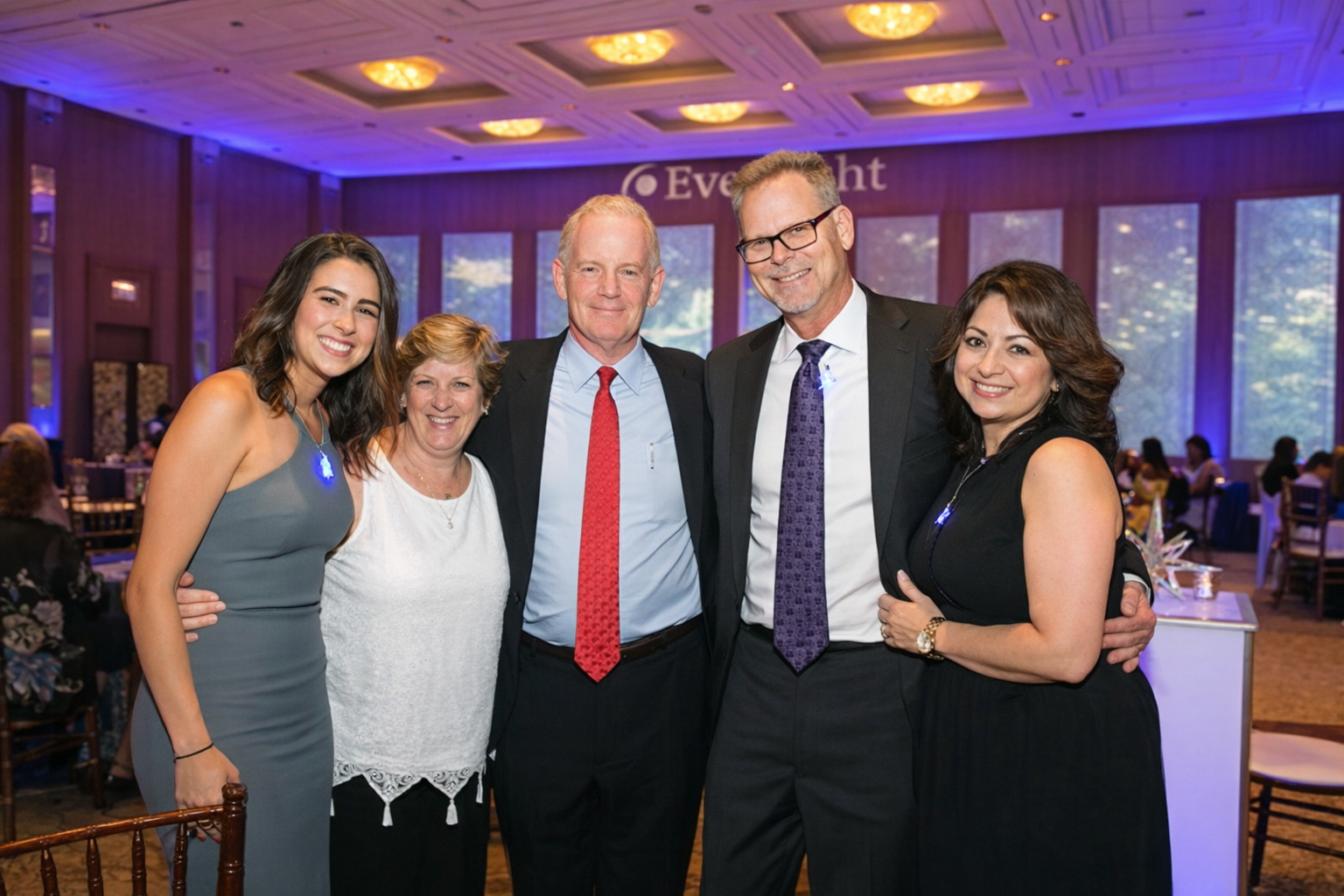
There are moments in parenthood when instinct takes over. When you know something isn’t right, even if you can’t yet explain it. For Ken and Irma Bates that moment came in 2004, when their 13-year-old daughter, Angelina, complained that something felt stuck in her eye.
What followed was a blur of appointments, uncertainty and fear—a journey no parent expects, but one that would forever shape their family’s understanding of sight, medicine and the extraordinary role doctors play in the lives of those they serve.
Ken and Irma often reflect on a physician who didn’t just treat their daughter; he steadied their family when they needed it most.
When a scratch becomes something more
Angelina was finishing eighth grade when she was told by an optometrist that she had a scratched cornea. Medication was prescribed but as time passed, her vision and discomfort didn’t improve.
“She was devastated,” Ken said. “She had to wear glasses to her eighth-grade graduation. But more than that, it just kept getting worse.”
After weeks without answers, the family was referred to an eye specialist, who referred them to another doctor. At the Wheaton Eye Clinic, the doctor paused mid-conversation, picked up the phone and made a call.
“When a doctor makes a phone call instead of telling you to call someone, you know it’s serious,” Ken said. “He said, ‘You need to go to Rush [University] tomorrow morning. Someone will meet you at eight o’clock.’”
By the end of that week, Angelina had seen more than 20 doctors. Then on a Thursday afternoon, they met Jonathan Rubenstein, MD.
Meeting the doctor who stepped in
Dr. Rubenstein examined Angelina, then asked to speak with Ken privately in the hallway.
“He told me, ‘She has some serious things going on right now. Long term to you and I—we need to make sure she can see, but long term for her is—she can't go out this weekend, so we're going to make sure we get through this,’” Ken recalled.
The next day, the gravity of the situation became clear. Angelina had a severe eye infection and the infectious disease team was called. As parents, Ken and Irma were terrified.
“That’s not what you want to hear—that they’re trying to save your child’s eye,” Ken said.
But through it all, Dr. Rubenstein was there, making sure the family understood every step and choice.
About a month later, Angelina’s cornea perforated. They went to their appointment that Friday morning, unaware of what the day would bring.
“He said we could do the surgery right now, or we could wait,” Ken said. “And I said, ‘Why would we wait?’ He said, ‘That’s the right decision.’”
Dr. Rubenstein walked them through every possibility, every risk and then offered his honest recommendation. That day, Angelina received an emergency cornea transplant. Slowly, things began to improve.
The impact that lasts a lifetime
What Ken and Irma didn’t realize at the time was that Dr. Rubenstein’s care wouldn’t end when the surgery did. Eight years later, when Angelina prepared to leave for college, he made sure her care would continue seamlessly.
Dr. Rubenstein made sure Angelina would have follow up appointments near campus, coordinating her care with a trusted colleague, an ophthalmologist at Mayo Clinic.
“He made sure she was taken care of—even when he wasn’t the one doing it,” Ken said. 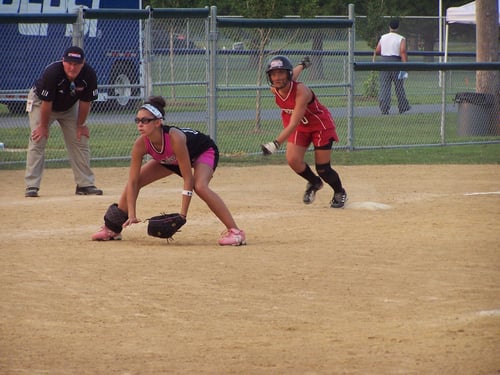
After a successful cornea transplant, Angelina returned to the sports she loved. She also learned to advocate for herself, even when it made her uncomfortable, like sitting in the front of classrooms and having to wear protective goggles when playing softball.
“He made it easy for her to continue to live her life,” Irma added.
Today, you wouldn’t know what Angelina went through. She’s a mother of two, has built a career, and she carries deep gratitude for the gift of sight.
“She became more humble,” Irma said. “It made her realize how precious life is and how precious simple vision is. As a parent, you’re proud of that.”
Why gratitude became action
Ken and Irma support Eversight for a simple reason: when their family needed sight-saving tissue, it was there—immediately. Behind that moment was a coordinated system of donation, recovery and surgical partnership that made emergency transplantation possible.
“We didn’t know anything about waiting lists,” Ken said. “The doctors and care team explained everything and made it all comfortable—and Eversight was part of that.”
Irma agreed.
“We didn’t know about Eversight until it happened to us,” she said. “Thank God it was there. We want Eversight to continue, and we want people to know about it.”
For the Bates, giving back is a way to honor the doctors who guided them and to ensure other families never face the unknown alone.
“If someone has to go through what we went through, you want Eversight to be there,” Ken said.
The lasting impact of a doctor’s care
Ken and Irma hope people understand the depth of a physician’s impact—especially in moments of crisis.
“They’re not just doctors,” Irma said. “They’re part of your family during that moment.”
Ken puts it this way: “Doctors can be knowledgeable. But compassion, that caring that comes from the heart, that’s a blessing.”
Of Dr. Rubenstein, they simply say: “The world needs more of him.”
If Ken and Irma’s story moved you, consider supporting Eversight. Your generosity ensures surgeons have access to sight-saving tissue when emergencies happen and helps honor the donors who make the gift of sight possible. Your generosity helps ensure that when families face the unimaginable, sight and hope are there when they need it most.