
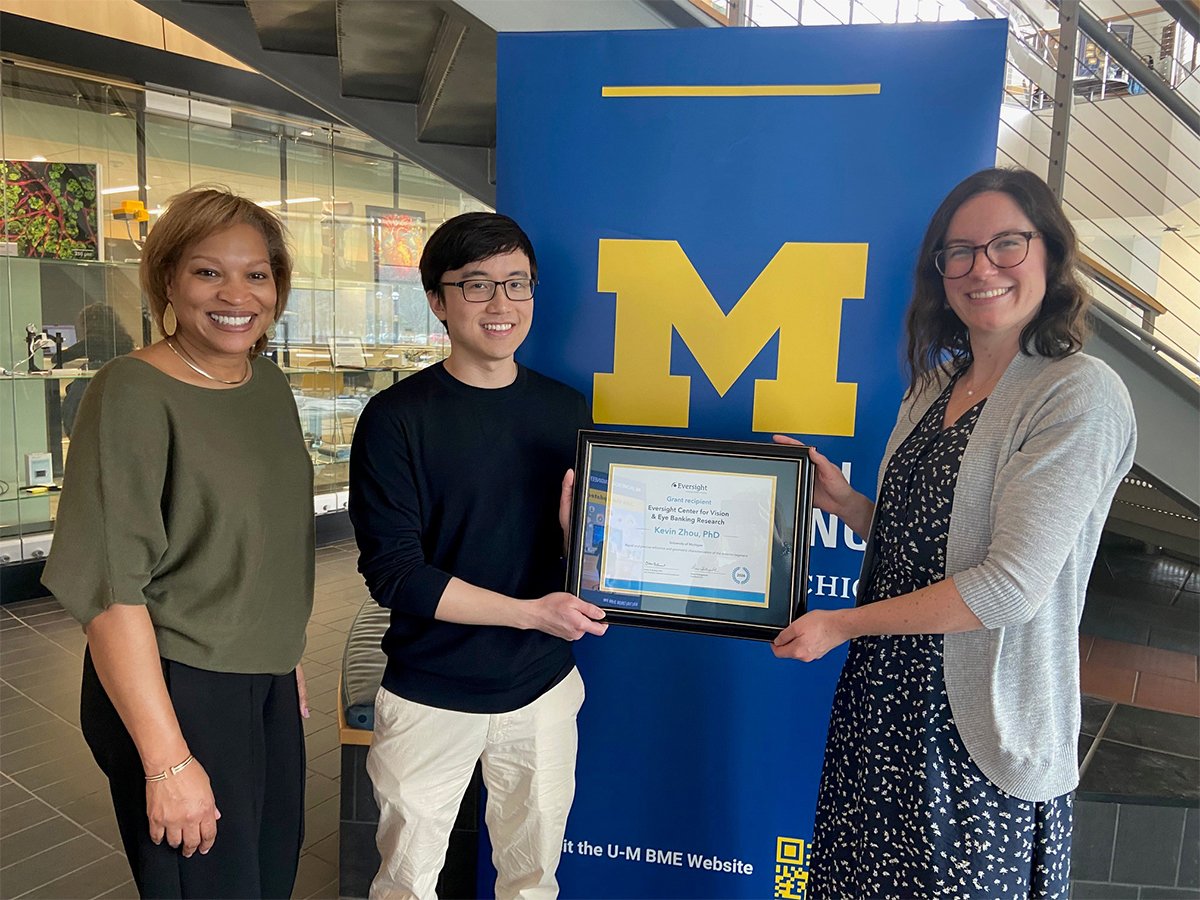
2026 Eversight Eye & Vision Research grants were awarded to investigators at Case Western Reserve University, Northwestern University, University of Michigan and Wayne State University to advance promising eye and vision research. Recipients were presented with award certificates earlier this year.
Each funded project reflects a commitment to advancing clinical care, improving outcomes and exploring new frontiers in vision science.
Applications for the 2027 Eversight Eye & Vision Research Grant program will open in summer 2026. Learn more at eversightvision.org/grants.
Brecken Blackburn, PhD
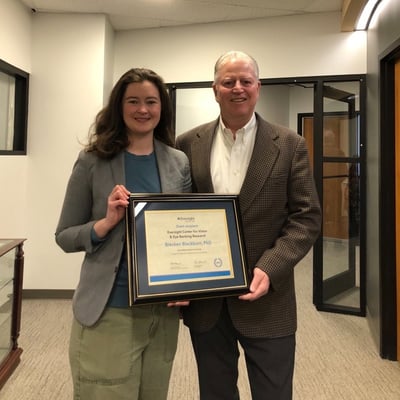 Dr. Blackburn is investigating how enhanced OCT contrast can be linked to corneal microstructure.
While laser vision correction surgeries like LASIK help people every year, some patients still face serious complications postoperatively. A key challenge is that refractive surgeons cannot precisely predict how each cornea will respond to surgery, as its strength and ability to withstand surgical stress varies from person to person.
This research aims to create a new tool called the Collagen Crimp Index (CCI), which builds on OCT systems already commonly used in refractive clinics. By combining several types of enhanced OCT measurements, Dr. Blackburn hopes to build a reliable index that tells surgeons how each patient’s cornea is likely to respond to surgery, allowing for more personalized and precise surgical planning.
If successful, this work could help surgeons reduce complications, avoid unnecessary repeat surgeries, and improve long-term vision outcomes for millions of people, while also speeding up the development of new and better surgical techniques.
Han Peng, PhD
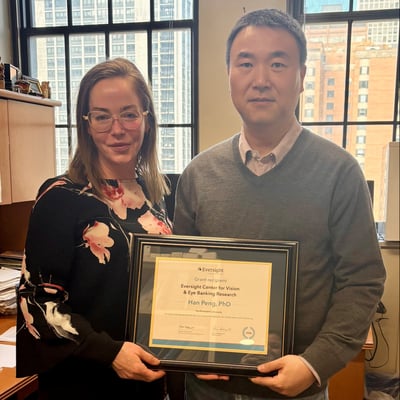 Dr. Peng is investigating a newly bioengineered ACE2 as a potential therapeutic for limbal stem cell deficiency.
One of the leading causes of blindness is limbal stem cell deficiency (LSCD), a loss or dysfunction of stem cells in the limbus. Anti-inflammatory drugs can be used to alleviate the symptoms of LSCD via global immunosuppression to dampen aberrant inflammation that contributes to LSCD. However, adverse ocular side effects prohibit long term use of these drugs.
Demonstrating the efficacy of this bioengineered ACE2 could support further development of this novel therapeutic not only for corneal diseases associated with inflammation but also other diseases related to new blood vessel formation.
Kevin Zhou, PhD
 Dr. Zhou is investigating rapid and precise refractive and geometric characterization of the anterior segment.
Vision relies heavily on the refractive components at the front of the eye, known as the anterior segment. Damage or diseases of these components can interfere with the ability to see, often necessitating surgery to replace the cornea or implant an artificial lens.
This research focuses on a new computational optical imaging system that will be able to fully and rapidly characterize the refractive and geometric properties of the anterior segment, enabling accurate and timely feedback to the ophthalmic surgeon and ultimately improved surgical outcomes.
Elizabeth Berger, PhD
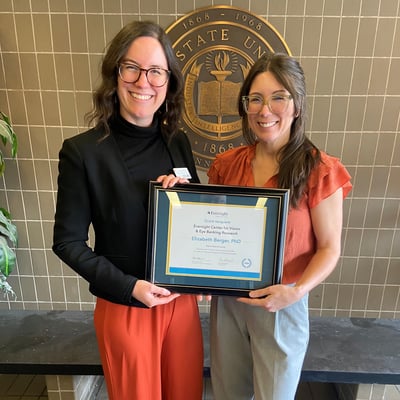
Dr. Berger is investigating the development of cyclic antimicrobial peptides for safe and effective treatment of bacterial keratitis.
Current antibiotics are becoming less effective as resistance continues to rise, leaving fewer options for patients. Dr. Berger’s approach uses specially designed antimicrobial peptides that are short protein-like molecules able to kill harmful bacteria, even those resistant to common drugs. Unlike traditional antibiotics, these peptides can be engineered to be safer and longer lasting.
Ultimately, this research aims to provide new, effective therapies for microbial keratitis, helping preserve vision for patients who currently have limited treatment options.