
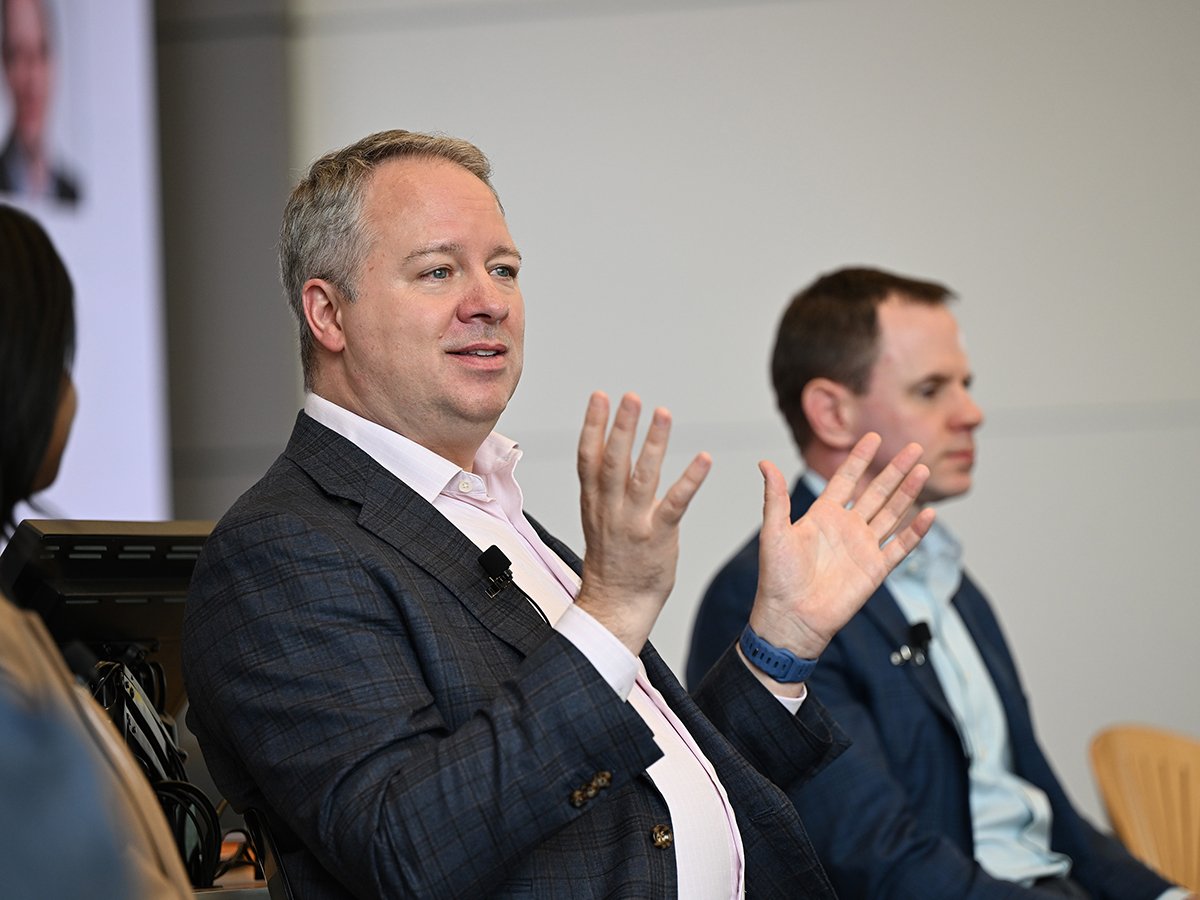
Early in his career, long before he held executive titles or led organizational transformation, Michael O’Keefe stood outside a hospital room preparing to recover corneas from an 11-year-old girl who had died of cancer.
He had done countless recoveries before. He understood the technical precision required, and he respected the weight of the work. But on this day, something shifted.
The girl’s father and older brother were waiting in the hallway to meet Michael before he went into her room. They stayed in the hallway for the entire recovery. That request changed Michael’s outlook on the mission he was serving. Until then, most of Michael’s work had been task-focused—receive the call about a donor, arrive at the hospital, complete the recovery and return the tissue to the lab. He understood it was meaningful, but the families who made such a selfless, courageous decision were out of focus.
“During the entire procedure,” he reflects, “I had them more in my mind than all the past cases I’d done before.”
In that moment, the work expanded. It was no longer just about safe recovery and successful transplantation; it was about trust. Trust from a grieving family to respect and honor their loved one, trust from a donor whose final gift could restore sight, trust from surgeons relying on that precious gift to help their patients.
That experience widened his lens. It taught him to step back from the immediacy of the task and ask himself, ‘What is really happening here? Who else is affected by what I do?’
That instinct—to get off the stage and into the seats, as he sometimes describes it—would become the foundation of his leadership philosophy and, ultimately, his impact on Eversight’s culture over the next 31 years.
Discovering that work could be different
Michael didn’t set out to become a culture leader. He grew up in Livonia, Michigan, and attended the University of Michigan with plans to pursue medicine.
“Luckily,” he jokes, “I didn’t get into medical school.”
A job posting his mother found in the Detroit Free Press led him to the Michigan Eye-Bank, now Eversight, where he started as a lab technician in a small sixth-floor space at the Kellogg Eye Center. Everything was on paper—donor charts on one side of a binder and recipient information on the other—so having good handwriting was key. The team was tiny, and everyone did everything: donor screening & authorization, tissue recovery, evaluation, tissue processing, distribution and surgeon follow-up.
“We were generalists, so there was no Donation Support Center, there was no Donor Eligibility, there was no Tissue Processing. We did it all from start to finish,” Michael said. “We would sometimes dispatch ourselves on our own cases, bring the tissue back and evaluate it ourselves.”
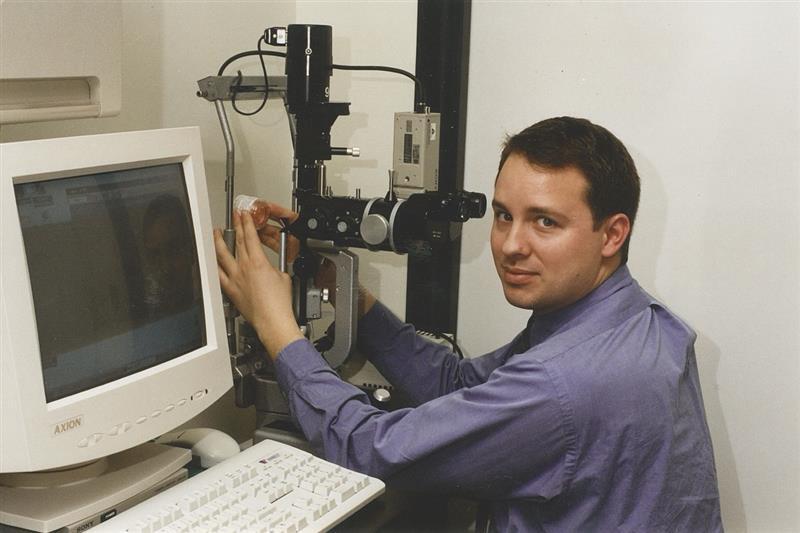
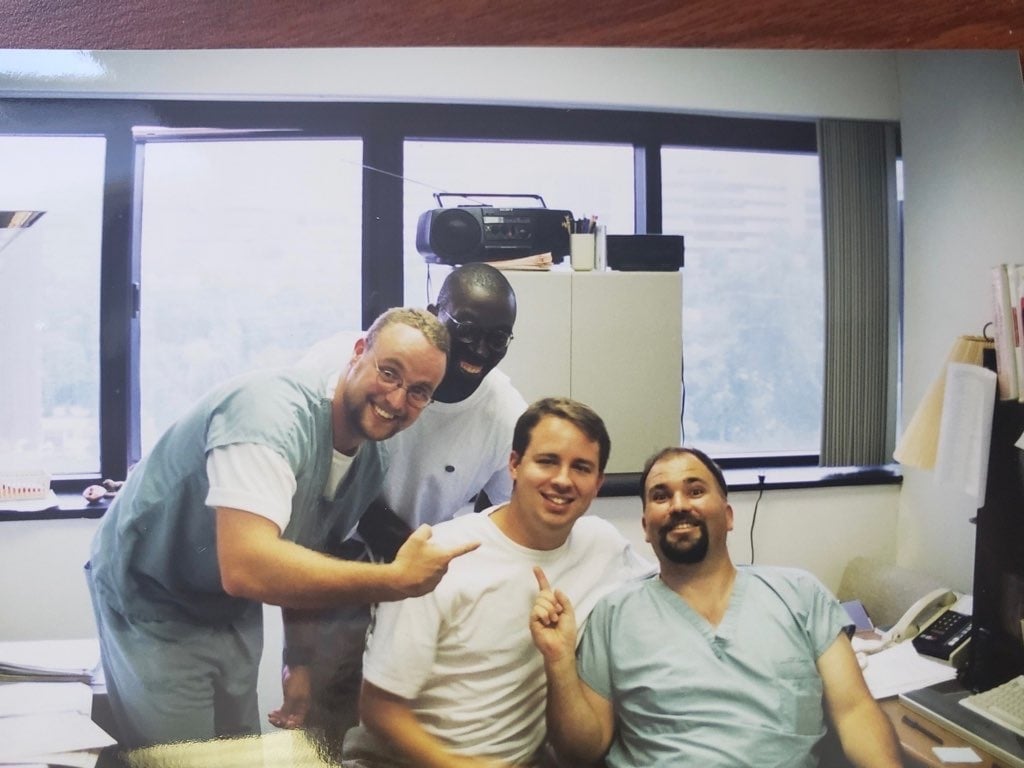
Those early years gave him a comprehensive understanding of his work, but not necessarily a connection to culture or the blueprint for leadership.
For years, he advanced through roles—lab technician, lab manager, technical director—but it wasn’t until later, during his MBA studies, that something began to crystallize.
An alumni email from the University of Michigan Ross School of Business about a “Positive Business Conference” caught his attention. He attended out of curiosity and walked away with a realization that would quietly reshape his career: work did not have to feel the way it always had.
“I started to hear that work could be different than the way I had experienced it,” he says. “That was the seed that got planted—I got infected.”
He describes himself as “patient zero” for culture change at Eversight—half in jest, half in truth. His first attempt to formalize that vision, under the title of Director of Organizational Transformation, was humbling. At the time, the eye bank’s engagement scores were low, cultural literacy was lacking and he had the passion but not yet the skills to lead meaningful change.
“All I did was hit brick walls,” he admits.
Through coaching and self-reflection, particularly the influence of Robert Quinn’s concept of “deep change,” which requires leaders to change themselves before asking others to do the same, Michael began to understand that culture transformation is not about slogans or surface-level fixes.
It’s about consistency, accountability and the willingness to confront your own role in a system that isn’t working. Or as Robert Quinn writes in Deep Change, “Having the courage to walk naked into the land of uncertainty.”
Connecting people to purpose & culture
The true turning point came when he was asked to lead the Communication and Logistics Center (CLC), now Eversight’s Donation Support Center, during a period of engagement challenges. The CLC team sat at the very front of the donation process, navigating emotionally complex conversations with hospital staff and potential donor families, yet they were internally disconnected from seeing the impact they helped start.
That realization led to a simple but powerful shift. Each month, managers began sharing specific outcome cards with team members, connecting a case they worked on to the people whose sight was restored because of it. The effect was immediate. Team members displayed the cards at their workstations and shared them on social media—they finally felt seen.
“It woke me up,” Michael said. “If we don’t intentionally connect people to the mission, they get siloed.”
From there, ‘Mission Moments’ were introduced. Donor families and recipients began sharing their stories with staff. One-on-one meetings became more meaningful within departments. Leadership development became intentional rather than incidental. Change did not happen overnight, but momentum grew.
Years into his career, when Michael later returned to clinical operations in an executive role, his focus was not on technical quality, but on rebuilding from a cultural standpoint. Over time, the shift became visible not just in survey data but in something more telling: the experience of new employees.
Today, through 30-, 60- and 90-day interviews, new hires often express gratitude for the warmth they experienced during their welcome and in their meetings with supervisors.
What he is most proud of is not that he initiated the change, but that it no longer depends on him.
“A true culture exists without any one of us,” he says. “It’s dependent on everyone else.”
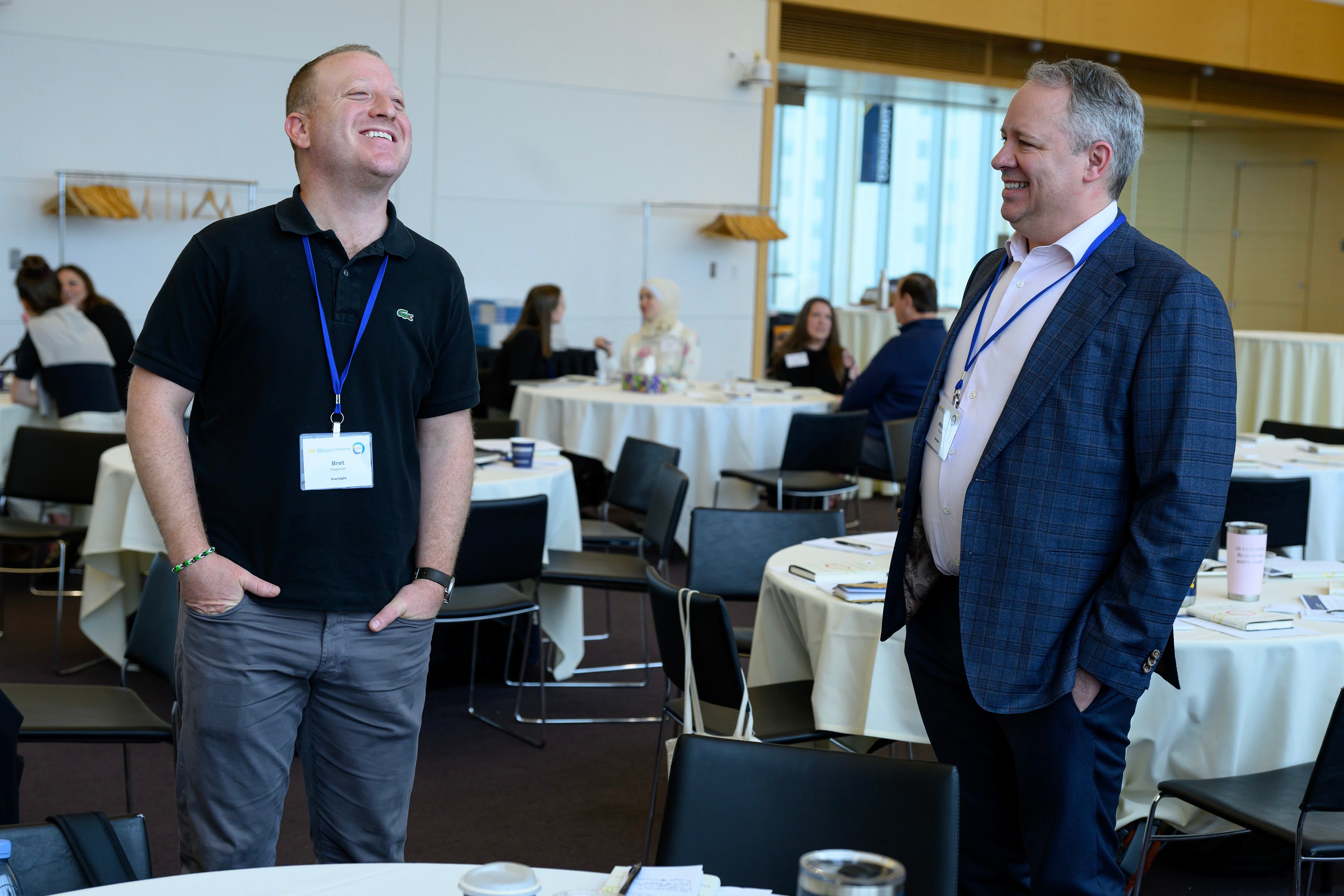
Leadership as accountability and courage
Ask Michael to describe his leadership style, and he will tell you he is most effective leading leaders. He sees his role as clearing obstacles and “greasing the wheels,” creating space for others to grow while holding them accountable to do so. He has little interest in micromanagement. Instead, he challenges leaders to stretch beyond their comfort zones, reminding them that even partial growth is still growth.
“If you learn 30 percent of what you hoped to achieve, you’re still 30 percent ahead. Not 70 percent loss,” he said.
He has little tolerance for cynicism. If there is a problem, he advises people to acknowledge it but also propose a solution—don’t be a bystander. He encourages leaders to communicate efficiently when something is difficult, and to practice what he calls being “kind, not nice.”
“Being nice avoids discomfort, but being kind tells someone, respectfully and directly, when something needs attention,” he said.
Approaching what’s next
As Michael approaches retirement after 31 years, he talks about the transition with clarity rather than apprehension. He has reflected intentionally on what it means to step away from a title and the identity that can accompany it.
Still, he is candid about one request he shared with Eversight's leadership team earlier this year: do not treat him as someone with an expiration date.
“I didn’t give 30 years to an organization to just not care about it after I leave,” he says.
His commitment to Eversight’s future remains strong, even as he prepares to hand off responsibilities to the other leaders in the organization.
When asked what legacy means to him, he rejects the idea of buildings or names etched in stone. Legacy, in his view, is quieter and more durable. It is an organization that continues to live its values, leaders who remain vigilant, teams that feel connected to their work and a workplace where people feel authentic to their true selves.
The 11-year-old donor who expanded his perspective decades ago reminded him that the work is always bigger than the task at hand. Over time, that lesson became his leadership lens—to take a step back, see the system and all its moving parts, connect people to their purpose and build something that lasts.
In that sense, his legacy is not a title or tenure.
It is a culture that leads with accountability, compassion and strength.
Join the Eversight team
One of the most rewarding parts of Michael’s career has been watching how Eversight continues to grow through the people who choose to join it. He points to the diversity of generations across the organization—from early-career professionals just beginning to experienced leaders who have spent decades in the field—as one of its greatest strengths.
Michael sees how a multigenerational workplace enriches Eversight, bringing different perspectives and ideas that help the organization adapt as the world changes.
“When people with different backgrounds and experiences join us, we begin to see the world through other eyes,” he said. “That helps us learn, evolve and ultimately become better at what we do.”
Michael believes the organization is strongest when individuals feel accepted and empowered to contribute beyond the boundaries of their job description—a belief shaped by his own experience.
Early in his career, Michael didn’t feel comfortable being himself at work or sharing personal parts of his life, like having a boyfriend. Today, after three decades and seeing how much Eversight has grown, he feels empowered to talk about his husband, Eric, and be his true self.
“I don’t want to hide who I am,” he said. “I don’t feel the need to announce it either—but being in a place where I can simply be myself matters, especially as a senior executive. It shows others they can be themselves too. That openness and acceptance have made a real difference over time.”
That sense of belonging shapes how Michael thinks about the culture Eversight continues to build.
“In an inclusive organization like ours, we want more people that are leaning in and trying to figure things out as the world's changing and helping to change with it—not resisting it,” he said.
For those who are eager to learn, collaborate and take initiative, Eversight offers a place to build a meaningful career while contributing to a mission that changes lives. And for those who simply want to do excellent work in a role they love, there is space for that, too.
“This is a place where people can grow,” Michael said. “But more importantly, it’s a place where people can be who they are, bring their ideas to the table and help shape what comes next.”